Scope & data flows
Identify regulated data, systems that store/process/transmit it, connected networks, facilities, and relevant service providers.
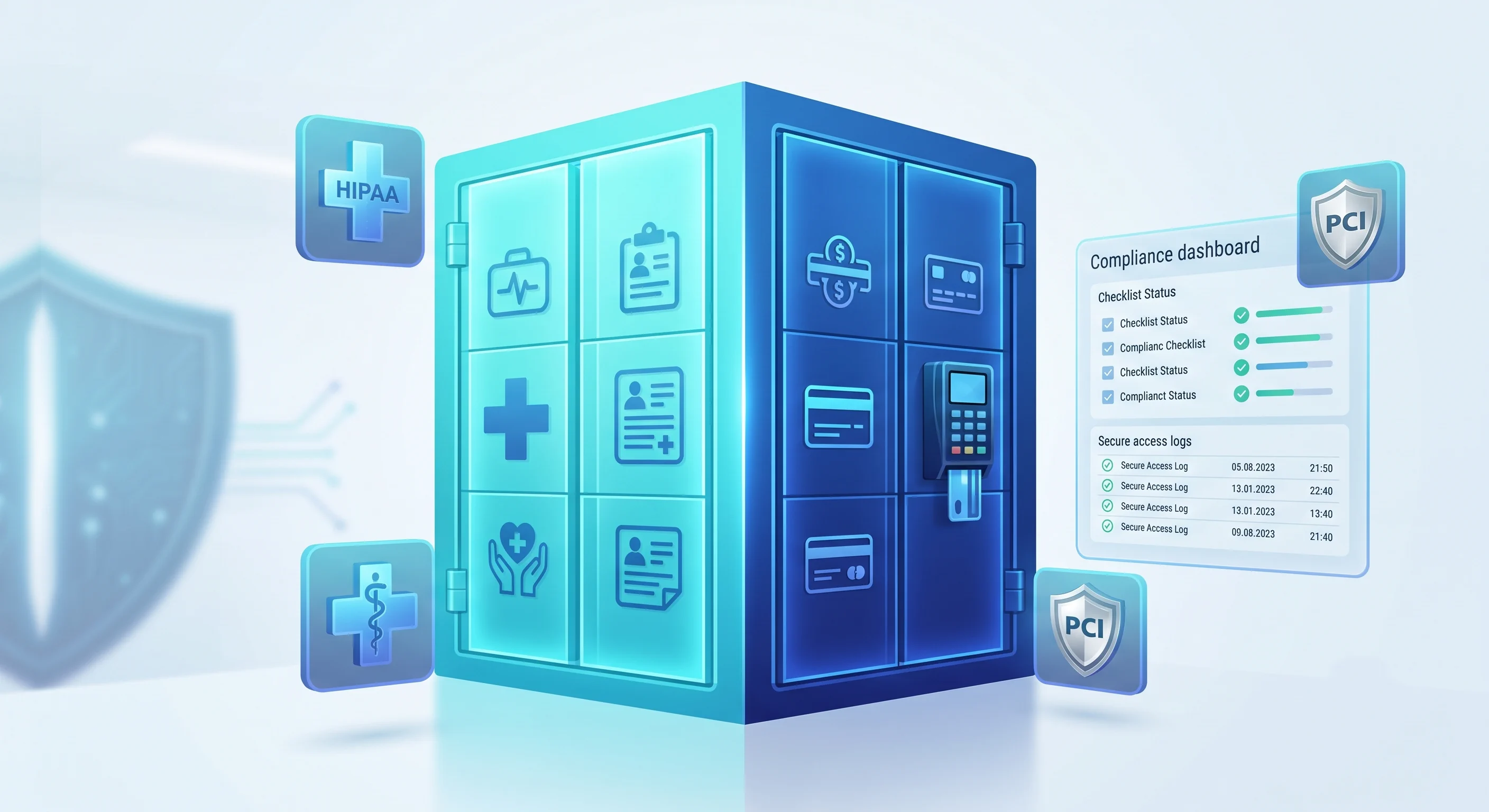
Converged security / compliance readiness
HIPAA and PCI DSS readiness depends on understanding where sensitive information flows, which systems and service providers support those flows, and how physical, network, and administrative safeguards work together. We help document scope, assess controls, identify gaps, and organize practical remediation priorities.
Request a readiness reviewAdvisory focus
Readiness work connects written requirements to the people, facilities, systems, and vendors involved in real data flows.
Identify regulated data, systems that store/process/transmit it, connected networks, facilities, and relevant service providers.
Review access, configuration, segmentation, logging, physical safeguards, incident processes, and vendor responsibilities against applicable requirements.
Record evidence and gaps, assign practical priorities, and develop a remediation roadmap with owners and follow-up checkpoints.
HIPAA readiness

For covered entities and business associates, the HIPAA Security Rule calls for administrative, physical, and technical safeguards to protect electronic protected health information (ePHI). Readiness work starts by identifying where ePHI is created, received, maintained, or transmitted, then evaluating relevant risks and existing protections.
Inventory ePHI locations and supporting systems; assess threats, vulnerabilities, likelihood, and potential impact.
Review unique user access, role-appropriate permissions, authentication, workforce procedures, and timely access changes.
Consider activity logging, log review, protection against improper alteration, and procedures for investigating anomalies.
Review facility and workstation safeguards, contingency planning, backup processes, and business associate responsibilities.
PCI DSS readiness
PCI DSS scoping depends on how an organization stores, processes, or transmits payment account data, and on systems that can affect the security of that environment. Map payment channels, terminals, network paths, connected systems, and relevant service providers before deciding which validation requirements apply.
Identify the cardholder-data environment (CDE), connected-to systems, payment flows, and third-party service providers.
Evaluate segmentation, firewall policy, access paths, secure configurations, and whether controls are tested as intended.
Organize policies, responsibilities, vulnerability management, logging, incident response, and corrective actions for review.

Scope matters. This advisory supports readiness and control planning; it does not itself certify compliance or replace legal, assessor, or acquiring-bank guidance. HIPAA obligations depend on covered-entity or business-associate status and handling of PHI. PCI DSS validation and scope depend on payment flows and the applicable program requirements.
Converged compliance readiness
Review your data flows, technical boundaries, safeguards, and readiness priorities with an architecture-focused consultation.