Digital ArcAngel cybersecurity and security systems

Converged security. One coordinated defense.

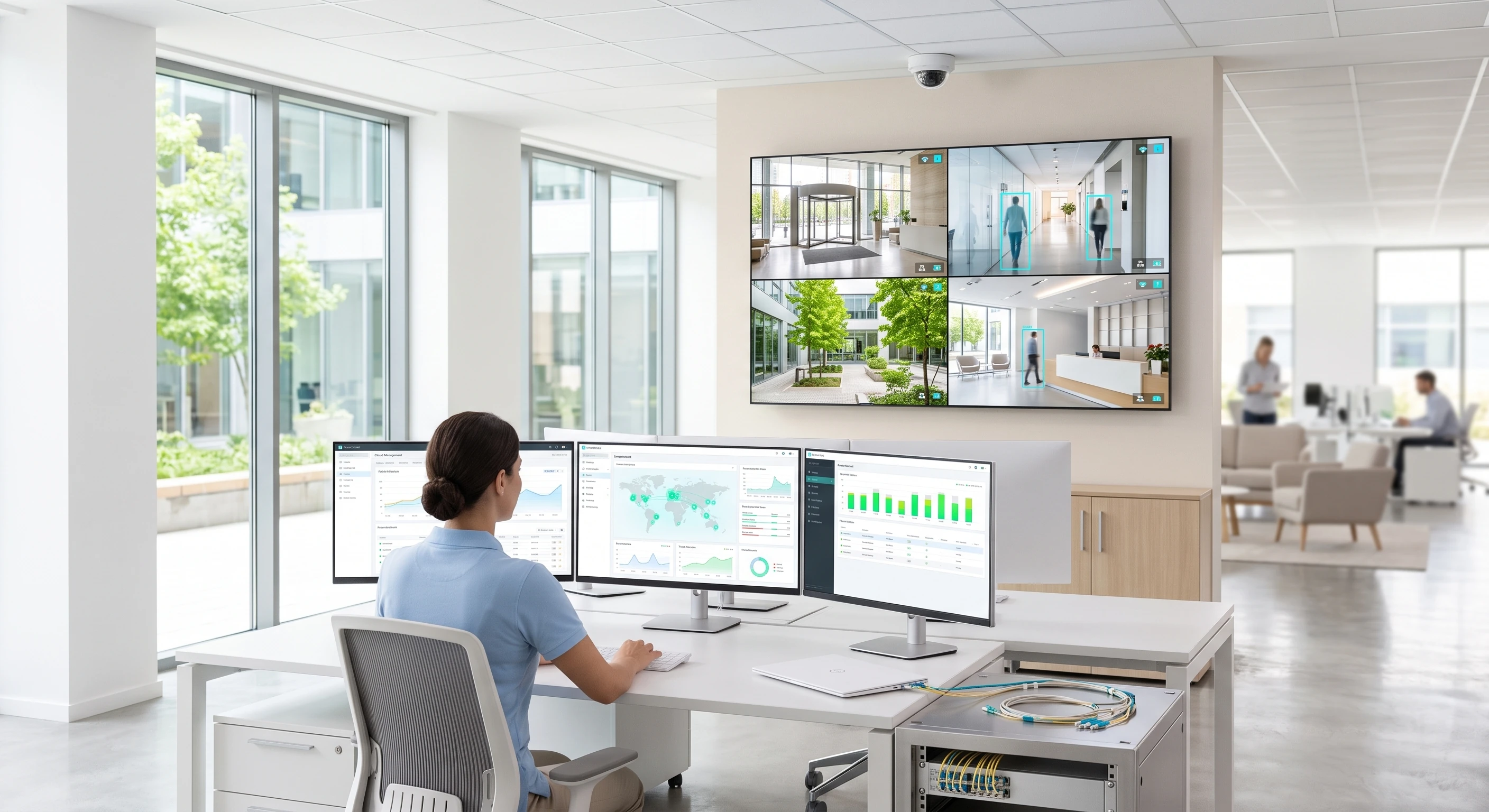
Digital ArcAngel brings traditional physical security, operational technology (OT), and digital cybersecurity into one coordinated framework for Maryland businesses. We look at how facilities, cameras and connected equipment, networks, devices, applications, and sensitive data interact, then help reduce the gaps between them.

That can mean coordinating camera placement and secure NVR access with network segmentation, firewall policy, endpoint hardening, identity controls, security logging, and tested recovery. We map connections and trust boundaries across physical, OT, and IT environments, prioritize findings by exposure and operational impact, and provide practical next steps. HIPAA and PCI DSS applicability depends on your organization and the information and payment flows it handles.

Physical securityOT resilienceDigital cybersecurity

Converged security / defense in depth

One security onion. Three connected domains.

Physical security, operational technology, and digital cybersecurity are interdependent. Starting at the outside and moving inward, these layers connect facility controls and connected equipment to networks, applications, and the data they support, reducing gaps between traditionally separate security programs.

OutsideInside

Six connected layers, protecting outward from your most valuable data.

  1. 01

    Physical Security

    Use controlled entry, visitor procedures, and camera coverage to protect facilities, server rooms, and operational areas. Coordinate facility response with workforce training for phishing, impersonation, and other social-engineering attempts.

  2. 02

    Perimeter Security

    Enforce inbound and outbound traffic policy with maintained firewalls; protect remote connections with VPNs and strong authentication; and monitor boundaries between the internet, business IT, and OT networks with IDS/IPS where appropriate.

  3. 03

    Network & Data Transit Security

    Separate guest, employee, payment, camera, and operational technology networks with VLANs and restrictive access rules. Monitor traffic between zones and encrypt supported data flows with current protocols such as TLS.

  4. 04

    Endpoint Security

    Manage laptops and mobile devices with timely patching, anti-malware, EDR, disk encryption, and least privilege. For OT devices that cannot be patched like standard endpoints, document exposure and apply compensating network controls.

  5. 05

    Application Security

    Use code review, dependency and secret scanning, and testing in development. Protect business applications, camera-management consoles, and APIs with sound authentication, input validation, and WAF rules where applicable.

  6. 06

    Data Security: The Core

    Classify business, customer, video, and operational data; restrict access by role; encrypt data at rest and in transit; and apply retention rules. Keep protected backups and test restores to verify recovery.

Compliance obligations depend on the organization and data flows. HIPAA applies to covered entities and business associates handling protected health information; PCI DSS scope depends on how an organization stores, processes, or transmits payment card data.

Converged security in practice

Coordinate protection across your environment.

Connect digital defenses, compliance work, physical security systems, and operational technology around shared risks, clear ownership, and practical controls.

Digital defense

CyberSecurity

Reduce attack paths across your environment. Establish an inventory of important assets, control traffic between network zones, harden endpoints, and prioritize remediation based on exposure and business impact.

Explore cybersecurity

Network defense

Define least-privilege firewall rules, restrict exposed services, and use IDS/IPS signals to investigate unusual inbound or outbound traffic.

Segmentation

Separate guest Wi-Fi, staff devices, payment systems, cameras, and sensitive servers; permit only required connections between zones.

Vulnerability management

Maintain asset and software inventories, assess severity and exposure, assign remediation owners, and verify fixes with follow-up scans.

DevSecOps

Add static analysis, dependency checks, and secret detection to pull requests and build pipelines; protect deployment credentials and review release permissions.

Compliance guidance

Compliance

Start by mapping regulated data, payment flows, systems, and service providers. Then document control gaps, assign owners, and prioritize remediation against the applicable requirements.

Explore compliance advisory

HIPAA

Review the Security Rule safeguards for electronic protected health information (ePHI): documented risk analysis, workforce access procedures, facility and workstation controls, unique user access, audit logging, integrity protections, and secure transmission. Readiness work can identify gaps and organize a corrective-action plan.

  • Private medical practices
  • Dental offices

PCI DSS

Map the cardholder-data environment, including payment terminals, connected systems, network paths, and service providers. Review segmentation, secure configuration, access controls, vulnerability management, logging, and incident procedures against the applicable validation requirements.

  • Restaurants and restaurant equipment
  • Sign companies
  • Sublimation printing
  • Dry cleaners

PCI DSS scope depends on how payment card data is accepted, handled, and stored.

Physical protection

Security Cameras

Design camera coverage around entrances, work areas, and operational needs, then protect the video system as part of the network. Installation planning considers camera placement, cabling, recorder capacity, retention goals, and secure remote access.

Explore camera systems

System design & installation

Select IP/PoE or analog equipment based on site conditions; plan fields of view, lighting, cable routes, switch capacity, and recorder placement.

Local recording

Size NVR storage against camera count, resolution, frame rate, and retention targets; restrict recorder access and periodically verify recordings.

Network isolation

Place cameras and recorders on a dedicated VLAN with firewall rules that deny unnecessary access to workstations, servers, and payment networks.

Secure remote access

Replace direct internet exposure with VPN-based access where appropriate; change default credentials, update firmware, and disable unused services.

Ready to secure your foundation?

Request an architecture audit to review your environment, identify the highest-priority risks, and leave with a practical remediation roadmap for your business.

Request an Audit