Licensed installation
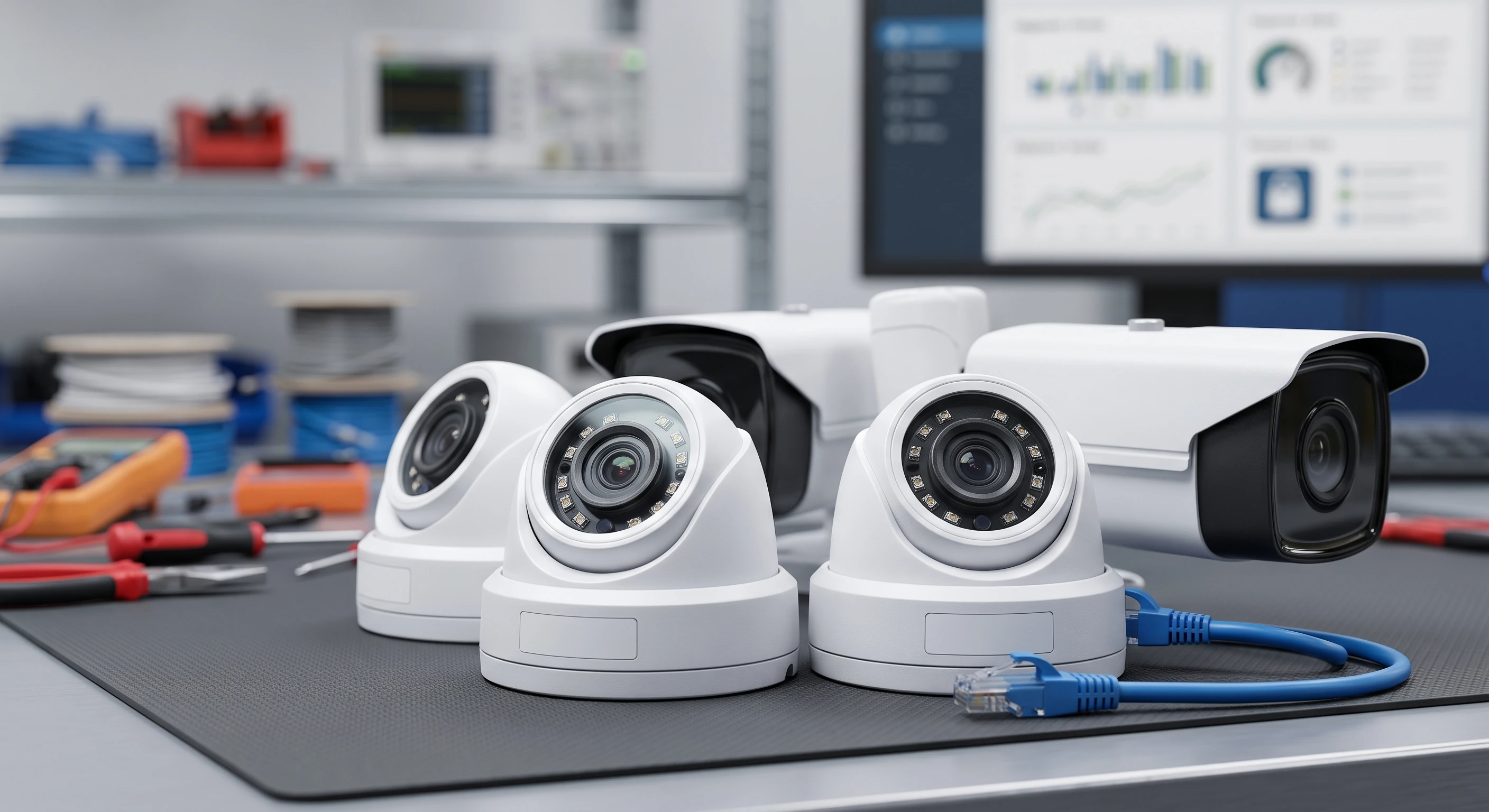
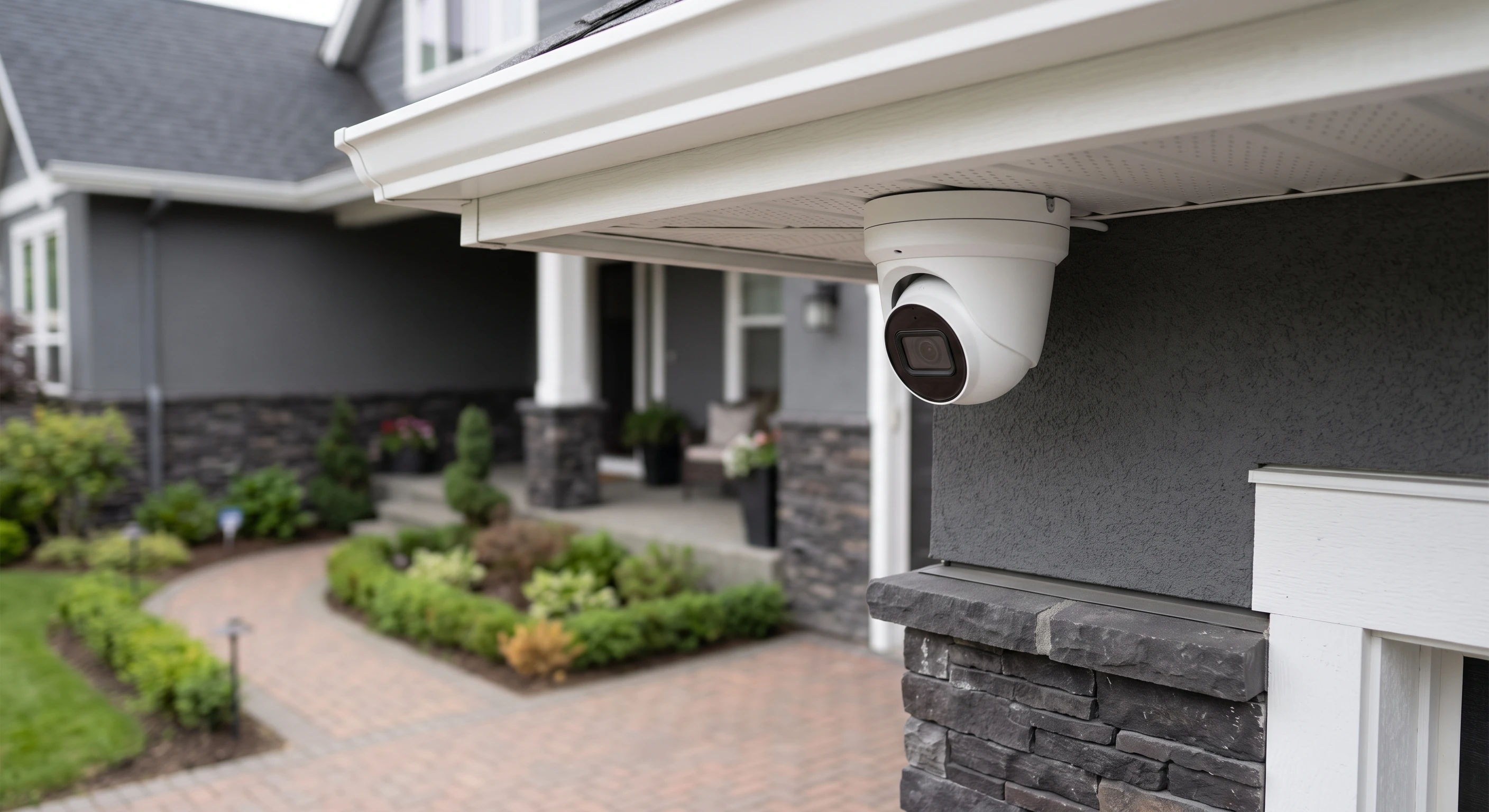
Install IP/PoE or analog equipment with attention to mounting, cable routes, weather exposure, and applicable site requirements.
Physical protection / connected systems
As a Maryland-licensed security systems contractor, we plan and install commercial and residential camera systems with both physical coverage and cyber risk in view. From IP/PoE cameras to existing analog systems, we consider sightlines, lighting, cabling, recording, network boundaries, and secure remote access as connected design decisions.
Discuss a camera projectSystem design & hardening
Coverage, recording, network access, and ongoing maintenance all affect whether a system is useful and resilient.
Install IP/PoE or analog equipment with attention to mounting, cable routes, weather exposure, and applicable site requirements.
Place cameras and recorders in an appropriate network zone and use firewall rules or ACLs to restrict unnecessary traffic.
Change default credentials, review user roles, update firmware, and disable services and protocols that are not required.
Prefer VPN-based or otherwise protected access over exposing recorder interfaces directly to the public internet.
Network isolation
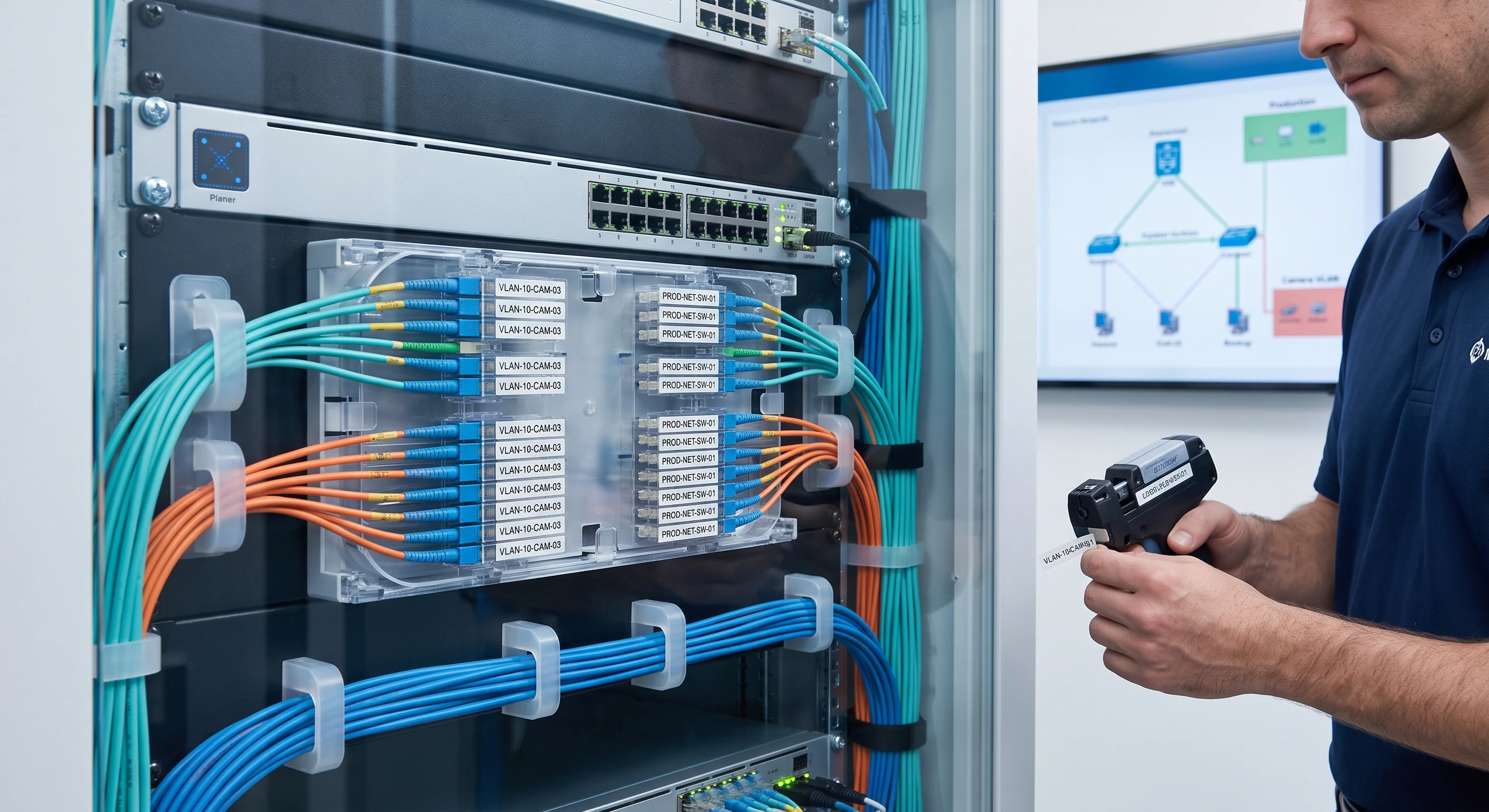
A dedicated VLAN can separate camera and recorder traffic from staff, guest, and payment networks, but a VLAN by itself is not a security boundary. Inter-zone firewall rules or ACLs should explicitly permit only required flows, such as camera-to-recorder traffic and authorized administration, while denying unnecessary access to other systems.
Design should account for switch capacity, PoE budgets, uplink bandwidth, addressing, time synchronization, and how footage is accessed. Review the rules after changes so a camera network does not become an unintended path into business or OT environments.
Design, recording & lifecycle
Camera count and placement should follow the coverage objective: entrances, transaction points, work areas, or perimeter views. Resolution, frame rate, field of view, lighting, and retention targets all affect storage demand and whether recorded footage is useful for review.
IP/PoE systems combine video and power over Ethernet and can simplify deployment, while analog systems may fit some existing installations. Recorder capacity should be estimated from camera count, encoding bitrate, motion patterns, and retention goals; verify recording and playback after installation. Apply firmware updates and review credentials and access permissions as part of ongoing system maintenance.
Connected physical security
Discuss site coverage, system type, recording goals, network placement, and secure access for your camera environment.